


Book An Appointment
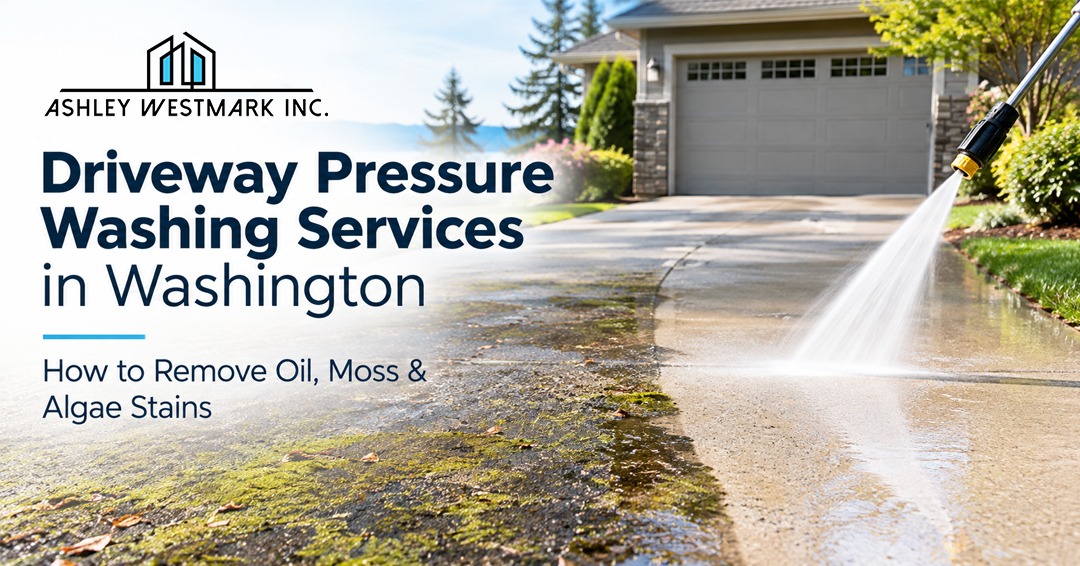
Your driveway’s looking rough. Oil stains from your car. Black streaks from mold. Green moss creeping across the concrete. You’ve tried scrubbing. Nothing works. That’s when you realize professional driveway pressure washing services are actually worth calling. Different stains need different approaches. This guide covers what causes these stains, why they’re stubborn, and how Ashley Westmark’s effective pressure washing services actually remove them.
Oil Stains Are a Real Problem
That dark stain under your car isn’t going anywhere without help. Oil penetrates concrete pores deeply. Regular soap and water don’t touch it. You can scrub for hours and barely make a dent.
The problem is that oil bonds to concrete at a molecular level. Pressure washing alone blasts water across the surface without penetrating deep enough. The stain looks lighter for maybe a week, then it’s back.
Oil stains also attract dirt and grime. Once you’ve got an oil spot, other dirt settles on it and makes it darker and more visible. One small leak seems manageable, but over months and years, oil accumulates. By year two or three, your driveway looks neglected.
If you live in Washington, then you must know that real driveway pressure washing services in WA use industrial degreasers specifically designed for oil removal. These chemicals break down oil at the molecular level. The degreaser soaks in. Then pressure washing removes the loosened oil. It’s the only method that actually works on old stains.
Moss Is More Stubborn Than You Think
That green, fuzzy growth on your driveway is actively damaging concrete, not just looking bad.
Moss Creates Real Damage
Moss roots grip concrete and create tiny pits as they grow. Over time, these pits expand. Your driveway surface breaks down. Water gets in those holes and freezes in winter, breaking the concrete further. Moss also holds moisture against concrete constantly. Wet concrete deteriorates faster than dry concrete.
Washington’s Climate Grows Moss Constantly
Our rain and shade create perfect conditions for moss. According to the National Weather Service, Washington’s persistent moisture and cool temperatures make moss growth inevitable. We get rain and clouds almost constantly. Trees shade most properties. If you live on the shady side, moss grows even faster.
Soft Washing Kills Moss Properly
Pressure washing blasts moss off but doesn’t kill roots. It comes back in weeks. Professional soft washing uses low pressure with specialized solutions that kill moss at the root level. When you kill moss at the root, it doesn’t come back for months. Results last significantly longer.
Algae Stains Are Stubborn
Black streaks across your driveway are algae, not dirt. Algae creates a film on concrete that makes driveways dangerously slippery. Someone walks across wet algae and slips. That’s liability and potential injury. Beyond the safety issue, algae breaks down concrete surfaces over time. Cracks form. Your driveway deteriorates faster with algae growth unchecked.
Trusted pressure washing services in Washington apply protective treatments after cleaning that slow algae regrowth. Professional treatments extend the time between cleanings significantly. Some treatments last several months.
Why DIY Pressure Washing Usually Fails?
You can rent a pressure washer for fifty bucks. But results are usually disappointing for serious stains.
Common DIY Problems
- Too much pressure etches or cracks concrete
- Too little pressure doesn’t clean anything
- Wrong chemicals don’t work on specific stains
- You miss underlying cracks and drainage issues
- Mistakes cost thousands in repairs
Finding the right balance requires experience. Professionals like Ashley Westmark know exactly what pressure works for different stains and concrete conditions. We’ve cleaned hundreds of driveways & we know which chemical works for which stain. Our team diagnoses the problem and applies the right solution.
While cleaning, professionals spot cracks, settling, or drainage issues. You’re focused on the stain. They might see a crack that needs sealing before it spreads. You’d never notice it while cleaning.
Prevention Prevents Expensive Repairs
Regular cleaning costs way less than driveway replacement. Here’s what maintenance prevents:
- Oil stains from becoming permanent damage
- Moss and algae from breaking down concrete
- Water from seeping into cracks
- Small problems from becoming big expenses
- Your driveway from aging faster
Your driveway’s designed to last 15-20 years. Oil, algae, and moss accelerate deterioration significantly. Regular cleaning maintains the concrete and extends its life. Spend a couple hundred yearly on cleaning. Or spend thousands on replacement in ten years instead of twenty.
Cracks found during cleaning can be sealed before they spread. Professional cleaners spot problems you’d miss. They might notice water pooling in spots or cracks you haven’t noticed. Early detection saves serious money.
Get Your Driveway Looking Right
Stop fighting your driveway. Professional cleaners are here to handle it correctly.
Call Ashley Westmark at (253) 400-1325 or book driveway cleaning online. They assess your driveway’s specific needs and recommend the right treatment. Oil stains get degreaser treatment. Moss gets soft washing with a preventive solution. Your driveway gets cleaned properly the first time.
Your driveway reflects on your home. It’s one of the first things people see. Professional cleaning is worth the investment.
Frequently Asked Questions
1. Can I remove oil stains myself?
You can try, but store-bought degreasers aren’t strong enough. Professional degreasers are industrial-strength and actually penetrate. DIY methods remove surface staining only, then the stain comes back.
2. How often should I have my driveway cleaned?
Once yearly minimum in Washington. More frequently if you park on it constantly or have heavy shade. Regular cleaning prevents buildup.
3. Will pressure washing damage my concrete?
It can if done the wrong way. Wrong pressure settings etch or crack concrete. That’s why professionals matter – they know the right pressure for your concrete type.
4. What’s the difference between soft wash and pressure wash?
Pressure washing uses high pressure to blast dirt away. Soft washing uses low pressure with chemical solutions. Soft washing is better for treating moss and algae because it kills organisms instead of just blasting them off.
5. How long do results last after cleaning?
Oil staining doesn’t return if removed completely. Moss and algae return slower with preventive treatments. Without treatments, they come back in weeks. With professional preventive treatments, you get several months.
6. Why do moss and algae come back so fast here?
Washington’s climate is perfect for growth. Rain, shade, and cool temperatures – everything moss and algae need. It’s not that your driveway is dirty. Regular maintenance is necessary in our climate.
7. Is professional cleaning worth the cost?
Yes. DIY equipment rental plus cleaner cost almost as much. Professional results are significantly better and actually solve the problem.
8. Can old, permanent stains be removed?
Most can be removed or significantly improved. Ask your service what’s possible with your specific stains before they start. Schedule a quick appointment today!
9. Should I use my own driveway cleaner or hire professionals?
Hire professionals. They have equipment and expertise you don’t. Professional-grade products are stronger and more effective.
10. What if my driveway has cracks or damage?
Professional cleaners spot these during cleaning and recommend sealing cracks before they spread. Early detection prevents expensive repairs.
Tags:DrivewayPressureWashing, PressureWashingWashington, DrivewayCleaning, MossRemoval, AlgaeRemoval, OilStainRemoval, ConcreteCleaning, ExteriorCleaning, WashingtonHomeMaintenance, PressureWashingServices, DrivewayMaintenance, WashingtonHomeowners, AshleyWestmark